VIP Vehicles for Large Conferences: Planning Transport for 500 Guests

In this article11
- Contents
- conference transport: Why is 500 a turning point in transport planning?
- conference transport: Step 1: How do you split 500 guests into transport tiers?
- Step 2: How do you calculate the buses required?
- Step 3: How do you manage Tier 1 arrivals without collisions?
- Step 4: What does the movement schedule look like for a full conference day?
- Step 5: How do you keep continuity under pressure?
- How has this been applied at real conferences?
- What does the JTEX team need from you to start?
- Frequently asked questions
- Additional options when your group travels together
Moving 500 guests to a large conference in Riyadh starts by sorting them into protocol tiers and matching each tier to a vehicle class: executive sedans and VIP SUVs for heads of delegation and keynote speakers, VIP vans for delegation members, and coaches on scheduled shuttle loops for everyone else, all under one dispatch desk. This article walks through a 500-guest planning scenario the way JTEX builds it, step by step, from receiving the guest list to the departure of the last vehicle.
conference transport: Why is 500 a turning point in transport planning?
A few dozen guests can be moved with parallel bookings and one coordinator watching a phone. At 500, the nature of the problem changes: movement becomes a system with peaks, loading queues, routes that intersect with city traffic, and decisions that must be made before the need appears. JTEX puts it simply: large-scale events cannot afford last-minute decisions, so the complete operational plan is in place before the first hour begins.
The figure of 500 here is a planning scenario for illustration, not a description of a specific event; the same method scales up or down.
conference transport: Step 1: How do you split 500 guests into transport tiers?
The guest list is the first input. Together with the organiser we sort it into three protocol tiers, each with a different movement pattern:
| Tier | Who | Movement pattern | Vehicle class |
|---|---|---|---|
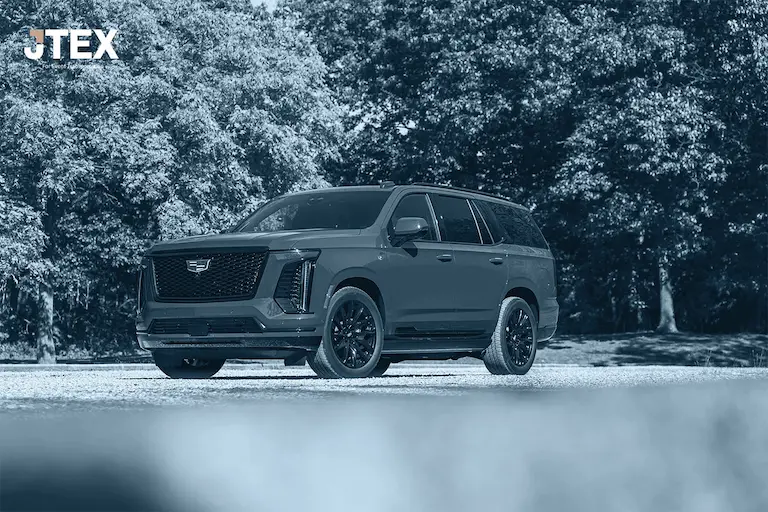
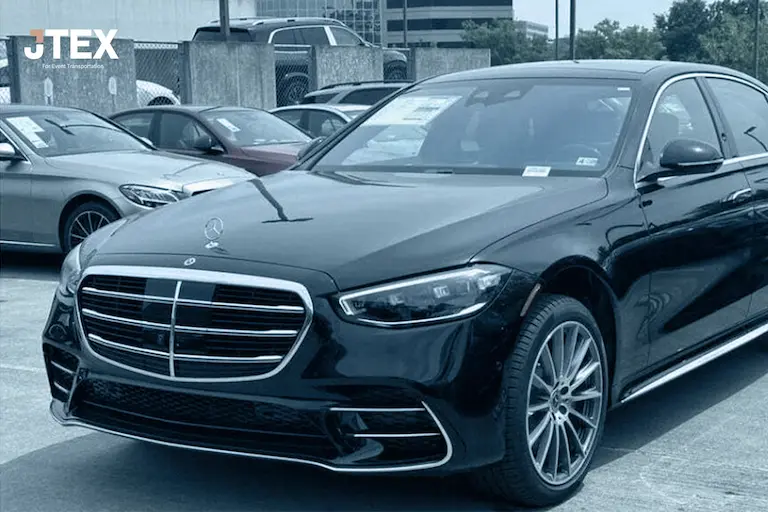
| Tier 1 | Heads of delegation, principal sponsors, keynote speakers | Individual schedule, VIP gate, arrival sequence | Dedicated executive sedan or VIP SUV with chauffeur |
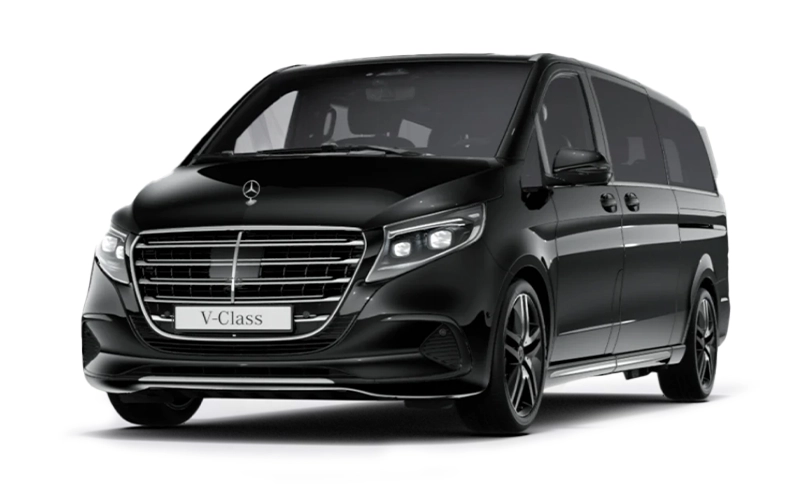
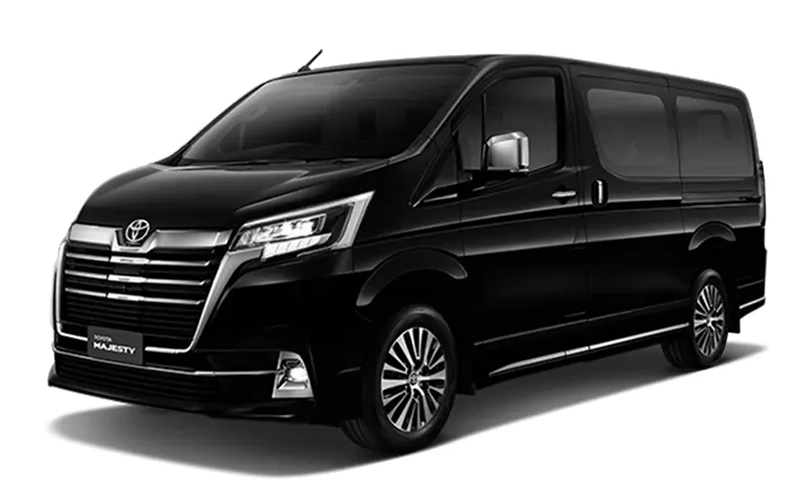
| Tier 2 | Delegation members, session speakers, senior attendees | Movement by delegation, semi-fixed times | VIP vans (Staria, V-Class, Sprinter) |
| Tier 3 | General attendees, media, staff | Fixed shuttle loops between hotels and venue | Full-size buses and mini buses |
The common mistake is to assign an individual vehicle to everyone with a title. Tiering by movement pattern rather than by title is what keeps the vehicle count sensible and the VIP gate clear.
Step 2: How do you calculate the buses required?
Buses are not a number you guess; they are the output of a calculation that starts from peak demand, not the average. The inputs: Tier 3 guests per hotel, the loop time from hotel to venue and back including loading, the time window in which everyone must arrive before the opening session, and the acceptable headway between buses. From these come the bus counts per hotel, plus surge buses staged at the venue for the evening peak after the closing session or before the gala.
For this layer JTEX combines full-size buses such as the Yutong and King Long for high-density routes with mini buses such as the Toyota Coaster for smaller hotels or tight entrances. Actual capacities are confirmed during planning based on the available combination; we do not promise generic figures.
Step 3: How do you manage Tier 1 arrivals without collisions?
Principals arrive via a separate path: a VIP gate, a private drop-off zone and a vehicle sequence agreed with the host’s protocol office and venue security. Each principal has a dedicated vehicle and one chauffeur for the duration of the conference, plus a liaison officer who knows their schedule. If the principal arrives by air, the same standard starts at the airport with a protocol reception and a waiting vehicle, so they never pass between two levels of service.
Step 4: What does the movement schedule look like for a full conference day?
The schedule is built around the official programme and divided into waves:
- Morning wave: buses leave the hotels at regular headways; Tier 2 arrives by van; Tier 1 then arrives through the VIP gate in a set sequence before the opening.
- Midday movement: limited transport for side meetings or site visits; dedicated vehicles wait, buses stand by.
- Evening wave: the real peak; Tier 1 departs first, then the vans, then the bus loops at full capacity with staged surge buses.
- Gala or dinner: if at another venue, the wave is repeated on a new pre-tested route, and loops return to the hotels afterwards.
Step 5: How do you keep continuity under pressure?
Continuity is engineered from the first step. Every route has a tested alternative with its time penalty, reserve vehicles and drivers are staged at a holding point, and decision triggers are defined in advance: a road closure, a late session, a delegation’s changed arrival. The dispatch desk sees vehicle positions live and speaks to one liaison per delegation and to the organiser’s team through one channel, so decisions take minutes rather than a meeting. This is what JTEX means by controlled dispatch cycles and contingency routing.
How has this been applied at real conferences?
At the International Mining Conference in Riyadh, the challenge was multi-tier international delegation movement across the conference days, with the coordination that requires between hotels, venue and business centres. At the 2nd International Justice Conference, delivered for our client the Ministry of Justice, JTEX ran executive arrivals and structured on-site movement for VIPs, delegates and international guests under strict safety protocols, including vetted drivers and secure routing. The participation is covered in our article on the 2nd International Justice Conference.
The shared lesson: great events are not remembered for their scale but for the precision of their execution, and behind every precise execution is an operational partner who knew what to do before the first hour began.
What does the JTEX team need from you to start?
- The official programme by day, session and side event.
- The list of hotels and estimated guest numbers in each.
- The Tier 1 and Tier 2 lists and their expected schedules.
- The site plan: gates, drop-off zones, staging areas, security checkpoints.
- The host organisation’s security and protocol requirements.
With these inputs, our conference and event service team prepares a complete movement plan with vehicle counts, schedules, routes and reserve capacity, and reviews it with you before sign-off.
Frequently asked questions
How many vehicles does a 500-guest conference need?
There is no single figure; the count depends on the tier split, the number of hotels, loop times and the arrival window. We calculate it from your event’s data, not from a generic average.
Can VIP vehicles and buses be run by one operator?
Yes, and it is preferable: one dispatch desk seeing all three layers prevents collisions at gates and keeps the VIP sequence intact.
What happens if the closing session runs an hour late?
Buses and dedicated vehicles stay at their staging points, and return loops are rescheduled by dispatch; this is one of the pre-agreed triggers.
Does the service include airport reception for delegations?
Yes. Airport reception is linked to the same conference plan, so a delegation experiences one standard from first arrival to final departure.
How early should planning begin?
As soon as the venue, dates and estimated guest numbers are fixed. Conferences in Riyadh’s peak seasons need capacity reserved early.
Request a transportation plan for your conference. Send your programme, hotel list and estimated guest numbers to JTEX on WhatsApp or through our contact page, and the conference team will return a full movement plan and quote.
Read company updates on the official JTEX LinkedIn page.
Additional options when your group travels together
For larger groups, compare separate cars with a vehicle that keeps passengers together. JTEX fleet options include the Mercedes V-Class, Hyundai Staria and Toyota Hiace. The examples below help compare vehicle types; confirm model availability, seating and luggage space with the team before booking.