Corporate Transportation Services in Riyadh: Contracts vs On-Demand

In this article11
- Contents
- corporate transportation: What exactly is a corporate transportation contract?
- corporate transportation: What does on-demand corporate transportation cover?
- How do the two models compare side by side?
- When does a contract clearly win?
- When is on-demand the smarter choice?
- Can the two models be combined?
- What should you ask an operator before signing a contract?
- What drives the price in each model?
- Frequently asked questions
- Additional options when your group travels together
Corporate transportation services in Riyadh come in two models. A contract gives your organisation dedicated vehicles, employed chauffeurs, fixed schedules and approved routes for a defined period; on-demand gives you a vehicle with chauffeur when a specific need arises, booked trip by trip. The right answer depends on how predictable your movement is, how many people move, and how much operational control you need. This article sets out the decision criteria and shows where each model earns its place.
corporate transportation: What exactly is a corporate transportation contract?
A contract is not a bulk discount on individual trips. It is a managed mobility system: JTEX assigns vehicles and chauffeurs to your organisation for the contract period, builds the schedule with you, approves the routes, and keeps an operational team on standby for the full duration. In JTEX’s own words from its corporate work, when you contract you do not get vehicles, you get fully managed mobility with fixed schedules, approved routes and a team on call throughout the agreement.
Typical contract scopes in Riyadh include:
- Daily employee movement between residential compounds or districts and the workplace.
- Executive vehicles with chauffeur assigned to a leadership team, available through the working day.
- Shift transport for operations that run outside normal hours.
- Recurring airport runs for a company with constant inbound visitors.
- Project-based mobility for a site, a hospital, a university or a government programme.
The scope is described on our long-term contracted transport services page, and the regulatory and planning background is covered in our guide to long-term contract transportation in Saudi Arabia.
corporate transportation: What does on-demand corporate transportation cover?
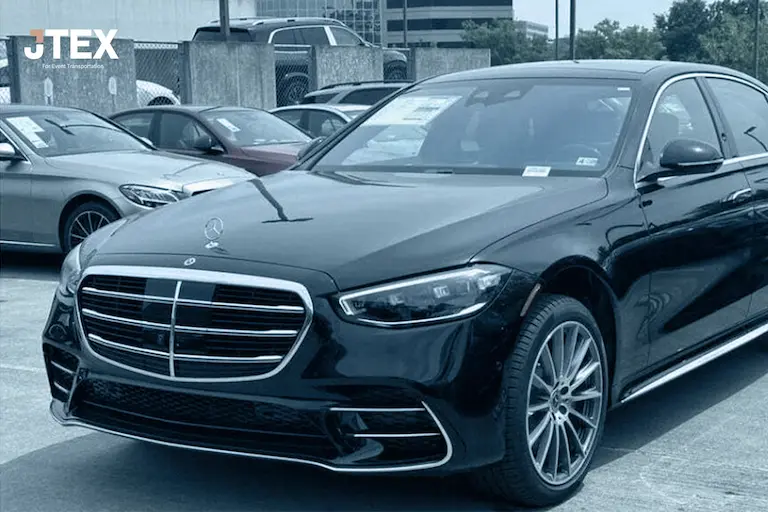
On-demand means a vehicle with a professional chauffeur, reserved for a specific trip, day or short engagement. It suits movement that is real but irregular: a visiting delegation for three days, a board meeting that needs executive sedans for one afternoon, a client dinner, a roadshow across the city, an exhibition where a team needs a VIP van for the week. The vehicle class is chosen per booking, from an executive sedan to a Hyundai Staria VIP van or a Mercedes-Benz Sprinter for a working group.
On-demand is quoted per engagement. It carries no commitment beyond the booking, which is its strength and its limit: there is no dedicated capacity held for you on the days you did not book.
How do the two models compare side by side?
| Criterion | Contract | On-demand |
|---|---|---|
| Pattern of movement | Recurring, predictable, daily or weekly | Irregular, event-driven |
| Capacity | Dedicated vehicles and chauffeurs reserved for you | Allocated per booking from available capacity |
| Scheduling | Fixed timetable and approved routes agreed in advance | Set at booking, trip by trip |
| Chauffeur continuity | Same chauffeurs who know your sites and people | Professional chauffeur assigned per trip |
| Operational oversight | Account team, monitoring and reporting for the contract period | Dispatch support for the booked engagement |
| Budgeting | Agreed periodic fee, easier to forecast | Variable, paid per engagement |
| Peak-season risk | Capacity secured regardless of season | Subject to availability in busy periods |
When does a contract clearly win?
Choose a contract when at least two of the following are true:
- Movement is daily. Employee or executive transport that happens every working day is a utility, and utilities are contracted, not bought ad hoc.
- Headcount is meaningful. Once a company moves dozens of people on a schedule, bus transportation on fixed routes is more reliable and more economical than parallel bookings.
- Continuity matters. A missed morning run disrupts a shift, a clinic or a classroom. Dedicated capacity and standby staff remove that risk.
- Compliance and reporting are required. Government entities and large corporates often need documented routes, driver records and monthly reporting; a contract builds these in.
- You want one accountable partner. A contract gives you an account manager and an operational team rather than a new conversation for every trip.
When is on-demand the smarter choice?
On-demand wins when movement is genuinely occasional. A company whose executives travel a few times a month, a firm hosting two or three delegations a year, a team attending an exhibition week: each needs a high standard of vehicle and chauffeur without paying to hold capacity in between. On-demand is also the natural way to trial an operator before committing to a contract, and the right tool for surges that sit on top of an existing contract, for example a conference week when the usual executive vehicles are not enough.
Can the two models be combined?
Yes, and most mature corporate accounts in Riyadh end up with a hybrid. The baseline, daily employee and executive movement, runs under contract with dedicated vehicles and chauffeurs. Irregular needs, visiting delegations, events, airport receptions for guests, are booked on demand through the same account team, so the standards, the invoicing and the point of contact stay consistent. The advantage of running both with one operator is that the dispatch desk already knows your sites, your security requirements and your people.
What should you ask an operator before signing a contract?
Before you sign, make sure you are asking the right questions:
- Are the vehicles owned by the operator, and are the chauffeurs its employees?
- What is the replacement procedure if a vehicle or chauffeur is unavailable on a given morning?
- How are routes approved and changed, and who signs off?
- What monitoring is in place during operations, and what reporting do we receive?
- How does pricing respond to changes in headcount or schedule mid-contract?
- Who is our single point of contact, and what is the escalation path?
JTEX answers these with owned vehicles, employed chauffeurs, a scheduled and monitored operation throughout the contract, and a named account team. That is the difference between a transport supplier and an operational partner.
What drives the price in each model?
We do not publish rates, because every account is scoped individually, but the factors are consistent. For contracts: number and class of vehicles, hours of operation per day, number of routes and their length, contract length, and reporting requirements. For on-demand: vehicle class, hours versus full day, number of vehicles, airport meet-and-greet, and the season. Share your pattern of movement with us and we will propose the model, or the hybrid, that fits it.
Frequently asked questions
What is the minimum length of a corporate transportation contract?
Contracts are scoped to the organisation’s need; many run annually with renewal, while project-based contracts follow the project timeline. We agree the term with you rather than imposing a fixed minimum.
Can we change routes or headcount during the contract?
Yes. Routes and capacity are reviewed with your account team, and the schedule is adjusted through an agreed change procedure.
Do you provide chauffeurs with the vehicles under contract?
Always. JTEX provides luxury transportation with chauffeur; we are not a self-drive rental company.
Can on-demand bookings be added to an existing contract?
Yes. Delegations, events and guest airport receptions are commonly booked on demand by contracted clients through the same account team.
Which vehicles are used for employee transport?
Depending on group size and route, buses and mini buses for larger groups, and VIP vans such as the Hyundai Staria or Mercedes-Benz Sprinter for smaller teams and executives.
Request a proposal for your organisation’s transportation. Describe your daily movement and occasional needs to JTEX on WhatsApp or via our contact page, and our corporate team will recommend a contract, on-demand or hybrid model with a detailed quote.
Read company updates on the official JTEX LinkedIn page.
Additional options when your group travels together
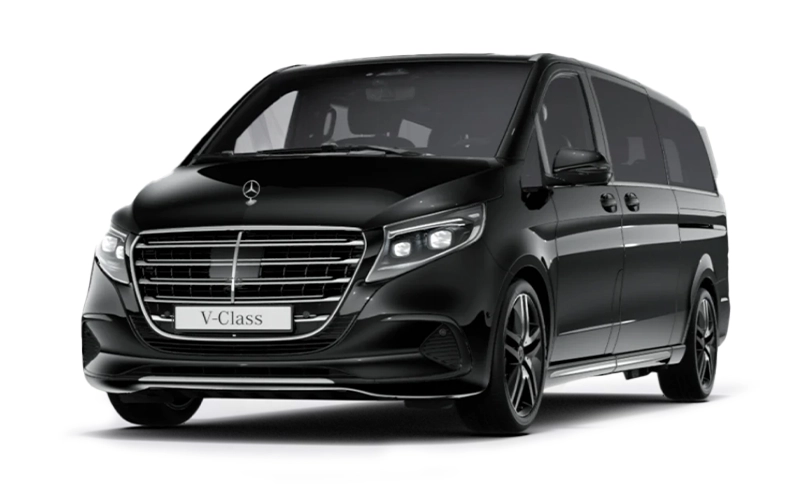
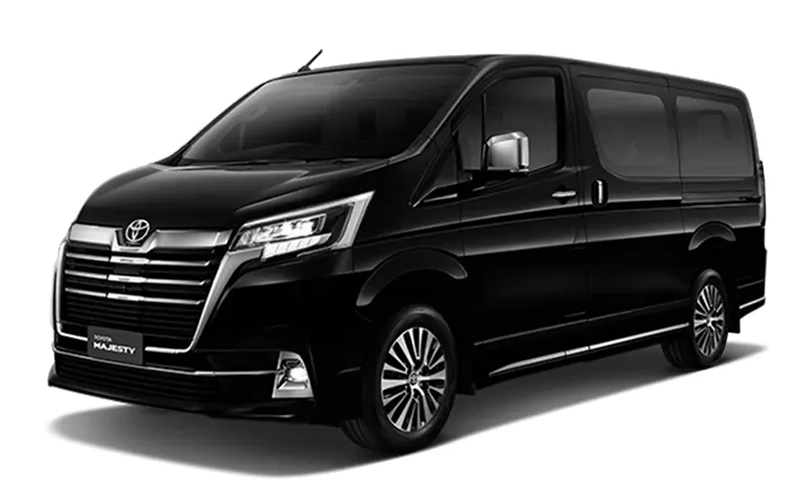
For larger groups, compare separate cars with a vehicle that keeps passengers together. JTEX fleet options include the Mercedes V-Class, Hyundai Staria and Toyota Hiace. The examples below help compare vehicle types; confirm model availability, seating and luggage space with the team before booking.